
EKG
Cardiac Rhythm Assessment Without the Wait
EKG in Oakhurst and Brick, NJ for patients experiencing chest discomfort, palpitations, or irregular heartbeat patterns.
Chest tightness during exertion, a racing heartbeat that won't settle, or a pulse that feels uneven all warrant immediate electrical activity assessment. Family First Primary Physicians performs electrocardiograms at both Oakhurst and Brick, NJ locations, capturing the heart's electrical signals to identify rhythm disturbances, conduction abnormalities, and signs of cardiac stress. The test records voltage changes as electrical impulses travel through heart muscle, producing a waveform that reveals how each chamber contracts and recovers.
An EKG measures the timing and strength of electrical signals across the atria and ventricles, detecting arrhythmias like atrial fibrillation, conduction blocks that delay impulses between chambers, and ST-segment changes that indicate insufficient blood flow to heart tissue. Electrodes placed on the chest, arms, and legs capture this activity from twelve different angles, allowing clinicians to pinpoint which area of the heart shows abnormal electrical patterns. The test takes approximately five minutes and requires no preparation beyond removing jewelry and avoiding lotions that interfere with electrode contact.
Schedule an EKG if you're experiencing unexplained dizziness paired with irregular pulse or if your primary care provider requested cardiac rhythm documentation.
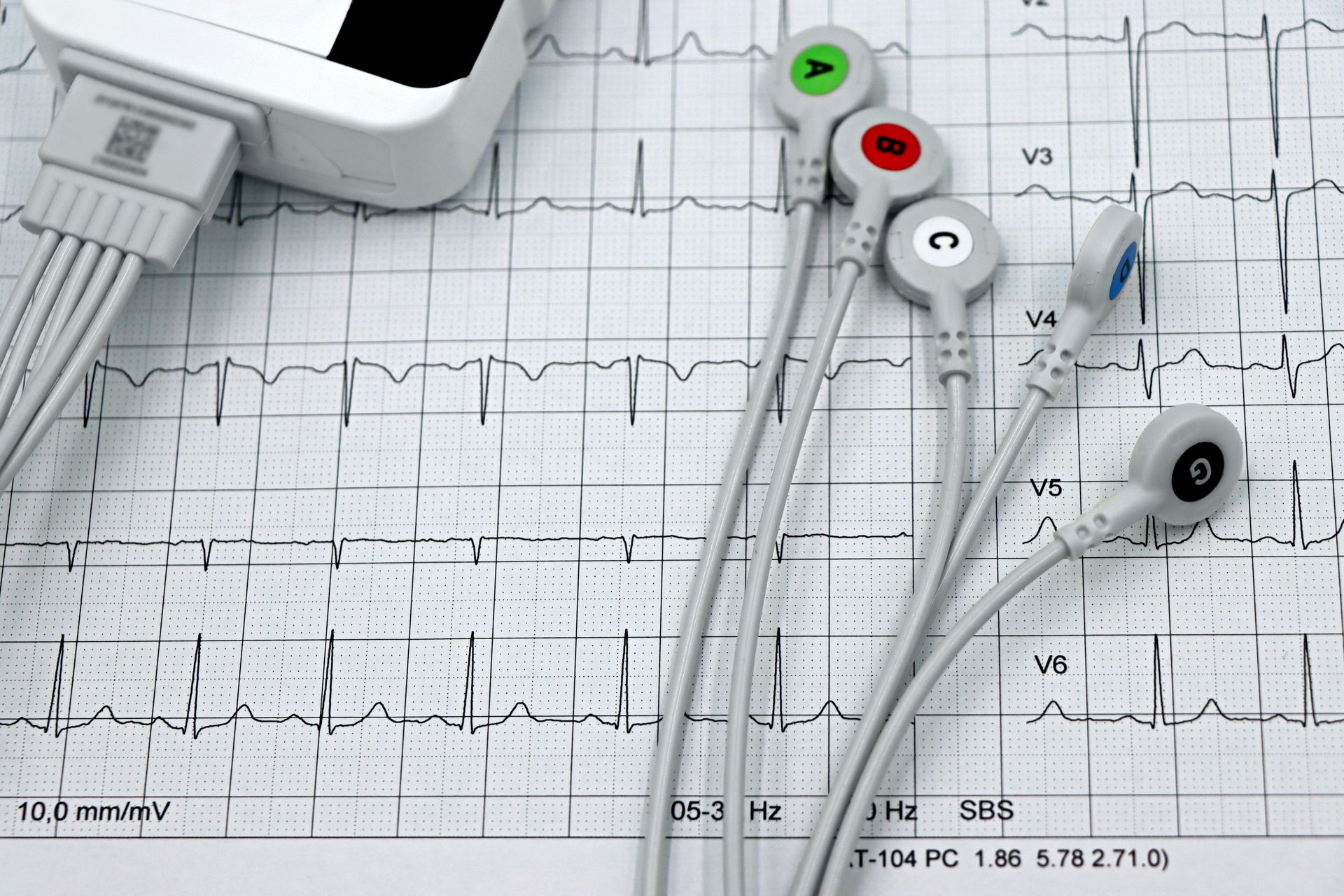
What the Electrical Tracings Actually Reveal
The twelve-lead configuration captures electrical activity from the heart's front wall, side wall, and inferior surface, with each lead pair showing how impulses move through specific tissue regions. The P wave reflects atrial contraction, the QRS complex shows ventricular contraction, and the T wave represents ventricular recovery—abnormalities in any segment's shape, duration, or spacing indicate where electrical conduction has changed. A prolonged QRS complex suggests the ventricles are contracting inefficiently, while an elevated ST segment may signal acute coronary events requiring immediate intervention.
After the test, you receive a printed tracing and interpretation that documents your heart's baseline electrical signature. Family First Primary Physicians uses this information to determine whether symptoms stem from rhythm abnormalities, to assess medication effects on conduction intervals, or to establish whether further cardiac imaging or specialist consultation is warranted. The results guide decisions about returning to physical activity, adjusting cardiac medications, or pursuing stress testing when resting electrical patterns appear normal but symptoms persist during exertion.
The service includes electrode placement, tracing acquisition, and clinical interpretation, but does not replace continuous monitoring needed for intermittent arrhythmias that occur unpredictably. Patients with sporadic palpitations may require Holter monitors or event recorders that capture electrical activity over days rather than minutes.
Questions Patients Ask Before Their First EKG
Patients often wonder what an EKG feels like and whether it requires recovery time. The following addresses common concerns about this cardiac assessment.
What does the EKG procedure involve?
Ten electrodes attach to your chest, arms, and ankles using adhesive pads, and you remain still on the exam table while the machine records electrical signals for about ten seconds—the process is completely painless and you can resume normal activities immediately afterward.
How does an EKG differ from an echocardiogram?
An EKG measures electrical activity that controls heartbeat timing and rhythm, while an echocardiogram uses ultrasound to visualize heart structures, valve function, and pumping strength—electrical testing reveals conduction problems, whereas imaging shows mechanical problems.
When should I get an EKG in Oakhurst or Brick, NJ instead of waiting for a cardiology appointment?
If you're experiencing active chest pain, sudden onset of irregular heartbeat, or syncope episodes, immediate EKG testing determines whether the electrical system shows acute changes requiring urgent intervention rather than scheduled evaluation weeks later.
What preparation does the test require?
You should avoid applying lotions or oils to your chest and limbs on the test day since residue prevents proper electrode adhesion, and wear a shirt that provides easy access to your chest—no fasting or medication changes are necessary.
Can an EKG detect all heart problems?
The test identifies electrical conduction abnormalities, rhythm disturbances, and patterns associated with inadequate blood flow, but it cannot detect structural defects like valve stenosis, measure ejection fraction, or visualize coronary artery blockages—those require imaging studies.
Family First Primary Physicians performs EKGs during all operating hours at both locations, with results interpreted before you leave. Request testing if you're experiencing cardiac symptoms that need immediate assessment rather than delayed specialist evaluation.